What Is a Digital Twin? A Complete Beginner’s Guide
Dec 22, 2025
What Is a Digital Twin?
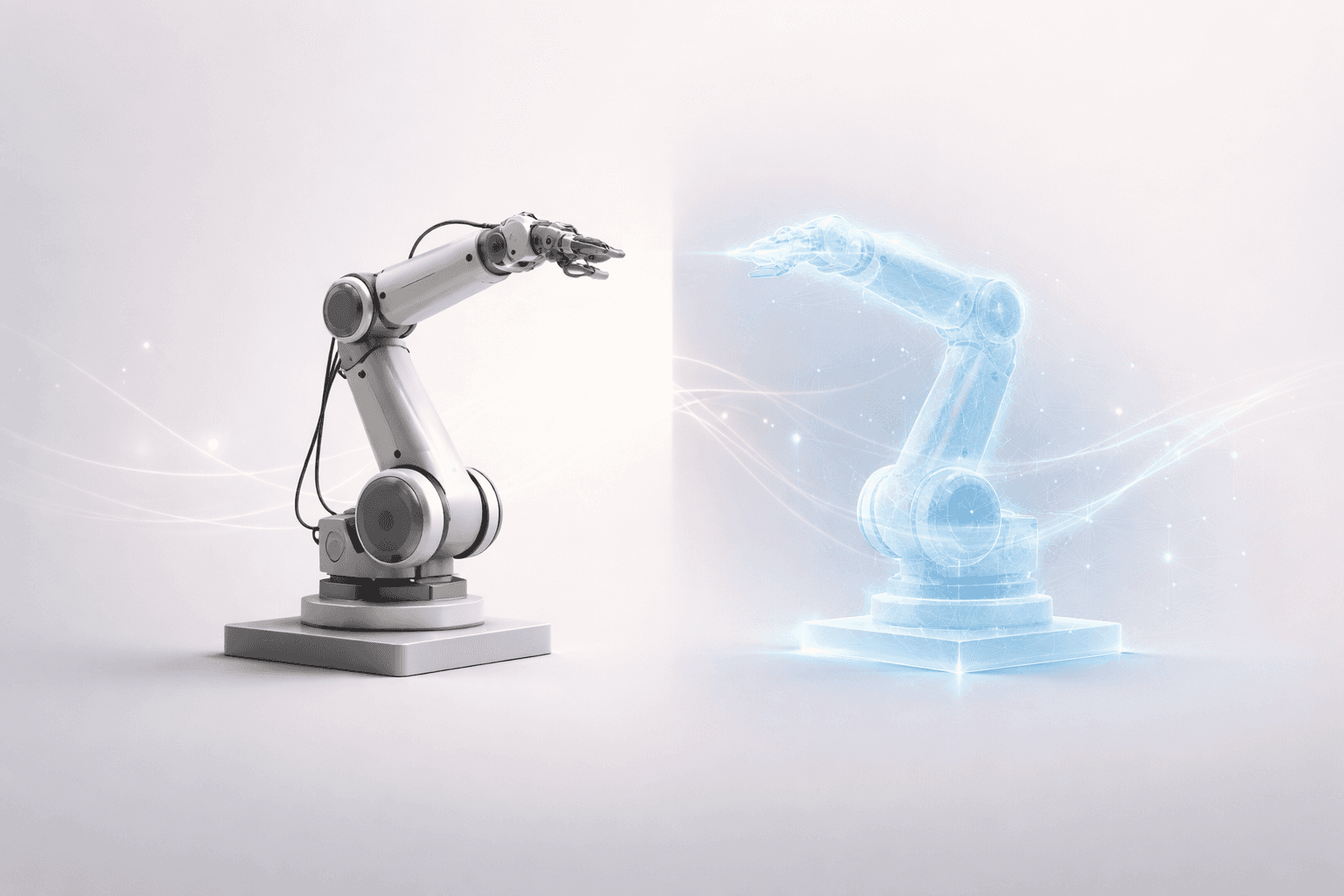
A digital twin is a virtual representation of a real-world object, system, or process that stays connected to its real counterpart over time.
In simple terms:
A digital twin mirrors something real, updates as it changes, and can be used to understand, predict, or improve outcomes.
A digital twin uses real-time data, historical data, and models to simulate, monitor, and optimize real-world entities across their lifecycle.
Digital twins are used to simulate performance, test scenarios, and make better decisions—without touching the physical version.
Why Digital Twins Exist
Before digital twins, organizations relied on static models, spreadsheets, or delayed reports. These tools were limited:
They didn’t update in real time
They couldn’t simulate future scenarios accurately
They required manual interpretation
Digital twins solve this by creating living models—systems that continuously reflect reality and evolve with it.
As systems became more complex and data-rich, static models stopped being sufficient.
How a Digital Twin Works (Step by Step)
At a high level, digital twins work by continuously syncing real-world data with a virtual model.
A digital twin typically consists of four core components:
1. The Physical Entity
This can be anything:
A machine
A factory
A supply chain
A person
A software system
2. Data Collection
Sensors, APIs, logs, or inputs capture real-world data such as:
Behavior
Performance
Conditions
Usage patterns
3. The Digital Model
This data feeds into a virtual model that represents the real entity’s structure and behavior.
The model can be mathematical, rules-based, or AI-driven, depending on complexity.
4. Continuous Feedback Loop
As the real-world entity changes, the digital twin updates—creating an ongoing feedback loop between physical and digital states.
What Makes a Digital Twin Different From a Simulation?Digital Twin vs Simulation
This is a common point of confusion.
Simulation | Digital Twin |
|---|---|
Static | Continuously updated |
One-time scenario | Ongoing representation |
Uses assumed data | Uses real data |
Disconnected | Actively linked |
A simulation answers “what might happen?”
A digital twin answers “what is happening—and what will happen next?”
This continuous connection is what enables prediction, optimization, and automation.
Common Types of Digital Twins
Digital twins exist across many domains. The most common types include:
Product Digital Twins
Used to model physical products throughout their lifecycle—from design to usage.
Process Digital Twins
Represent workflows, operations, or systems (e.g., logistics, payments, manufacturing lines).
System Digital Twins
Combine multiple components into one unified model, such as an entire factory or platform.
Human or Behavioral Digital Twins
Model behavior, preferences, decision-making, or communication patterns—often used in AI-driven systems.
Many real-world implementations combine multiple types into a single system.
Where Digital Twins Are Used Today
Digital twins are already shaping major industries:
Manufacturing: Predict maintenance needs and reduce downtime
Healthcare: Model patient outcomes and treatment paths
Smart Cities: Optimize traffic, utilities, and infrastructure
Finance: Monitor risk and system behavior
AI & Software: Create adaptive, learning systems that evolve with users
In practice, digital twins often start with one use case and expand as data maturity increases.
Why Digital Twins Matter Now
Three major shifts are driving adoption:
Real-time data is everywhere
AI systems require context, not just inputs
Businesses need predictive insight, not hindsight
Digital twins sit at the intersection of these shifts.
They turn raw data into understanding.
Digital Twins and AI: A Natural Pair
Modern AI systems perform best when they understand:
History
Patterns
Preferences
Constraints
A digital twin provides this structured context.
Instead of reacting blindly, AI can:
Anticipate outcomes
Personalize decisions
Adapt behavior over time
Digital twins give AI systems persistent context, memory, and feedback loops—something traditional data pipelines lack.
This is why digital twins are increasingly foundational to AI-powered products and assistants.
A Simple Example
Imagine a digital twin of a customer:
It learns how they communicate
It understands their preferences
It adapts based on feedback
It represents them consistently across systems
This enables smarter automation, better personalization, and more aligned decision-making—without losing human nuance.
This approach is increasingly used in customer experience, personalization, and intelligent assistants.
The Future of Digital Twins
Digital twins are evolving from:
Tools → systems
Models → intelligence layers
Representations → extensions of reality
As AI advances, digital twins will become the interface between humans and machines—bridging data, intent, and action.
As systems become more autonomous, static representations won’t be enough.
Frequently Asked Questions
Is a digital twin the same as a simulation?
No. A simulation is static and scenario-based, while a digital twin stays continuously connected to real-world data.
Do digital twins require real-time data?
Not always. Many digital twins combine real-time and historical data, depending on the use case.
What industries benefit most from digital twins?
Manufacturing, healthcare, energy, smart cities, finance, and software are among the most common adopters.
Can digital twins represent people or behavior?
Yes. Behavioral and human digital twins model preferences, decisions, and patterns and are increasingly used in AI systems.